NEWS: BOE HOLDS BENCHMARK RATE AT 3.75% (STILL)
THE BOE HOLDS COURSE AT 3.75% BUT THERE IS DISSENT IN THE RANKS
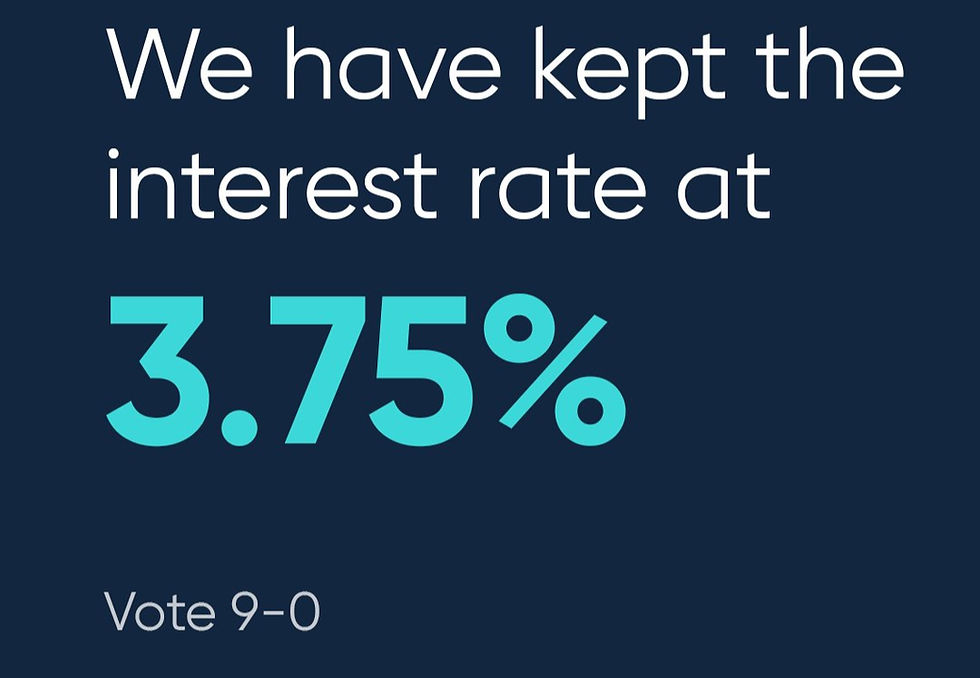
On 29/04/2026 the Bank of England (BOE) held its benchmark base rate at 3.75% in a 8-1 vote from its Monetary Policy Committee (MCP). In contrast to the previous March 2026 vote which was unanimous there was dissent in the ranks with Chief Economist Huw Phil being the sole dissenter but others signalled they would soon follow suit unless energy prices soon come down (which they won't).

MARKET REACTION:
GBP/USD: The pound was little changed following the vote rising 0.4% to $1.3473.
Gilts 10-Year Yield: Fell 6 basis points to 5.04%.
Equities: The FTSE 100 dropped 1.2%.
Traders: Trimmed wagers on the extent of the BOE hikes for 2026 pricing around 2 more and a 50/505 prospect of a third.
Next Rate Decision: 18/06/2026.
The BOE MCP meets 8 times per year to consider the benchmark base rate thereafter, it publishes its MCP minutes. Those arising from 29/04/2026 can be viewed by clicking here.
THE DISSENTING LINE
Chief Economist Huw Phil voted for an immediate increase in the base rate to 4%. He reasoned that an early, modest tightening would insurance against inflation persistence risk that were under-appreciated by the majority: In concise summary:
Events in the Gulf had left the outlook for global energy prices elevated and it was unlikely that uncertainty would dissipate any time soon. Higher energy prices represented a clear inflationary shock to the UK.
The second-round effects in price-and-wage setting stemming from this shock had the potential to raise UK inflation beyond the near term in a persistent manner.
The risk of those second-round effects are skewed to the upside in each of the 3 scenarios set out by the BOE in the April MCP Report.
While a looser labour market could moderate the second-round effect, the structural changes in price and wage-setting behaviour, plus greater household attentiveness (and salience of) energy food prices, could strengthen those effects beyond the scenarios.
The underlying disinflation process had been stalling even before the latest energy-price shock. A prompt but modest hike would mitigate upside risks to the lasting achievement of the 2% inflation target and the risk of intrinsic inflation persistence re-emerging.
THE RULE OF THREE
The BOE continued to deflect the cause of the UK's economic collapse onto the recent conflict in the Middle East. It recognised that CPI inflation had increased to 3.3% which would likely increase towards years end as the effects of higher energy prices pass through the economy. This it correctly recognised created a material risk of second-round effects in both price and wage-setting but as the labour market continued to loosen, a weakening economy could, it theorised contain inflationary pressures (balderdash).
That being said, due to the high degree of unpredictability stemming from the USA & Israel vs Iran conflict, the BOE scrapped its central inflation projection and instead lay out three different energy path and second-round inflation scenarios.
The worst case of the 3 BOE scenarios saw inflation exceeding 6% (charts courtesy of Bloomberg):

Regardless, all 3 BOE Scenarios suggested that the benchmark rate would need to rise, with the worst case envisaging oil prices staying near $130 per barrel - that almost occurred Thursday morning before easing back.
Under the worst case scenario, the modelling used to show the possible effect on monetary policy indicated that the rates would need to rise sharply by between 66 to 151 basis points. And yet the BOE still voted against action.
THE OFFICIAL LINE
The BOE noted some direct impacts from the energy supply shock were already visible, notably in higher household motor fuel prices, with CPI inflation having increased to 3.3% in March. Based on the energy futures curves in the 15 days to 22 April, Bank staff expected inflation to decline to 3.1% on average in 2026 Q2, before rising back to 3.3% in Q3. That Q3 projection was 1.4 percentage points higher than at the time of the February Monetary Policy Report.
In addition to higher fuel prices, the upside news also reflected the projected increase in the Ofgem price cap that would affect household utility prices. The indirect effects of high energy prices via increased production costs were also expected to be significant, and likely to affect food prices particularly. CPI inflation was expected to rise somewhat further in Q4. Yet Govenor Andrew Bailey took the view that holding rates was a "reasonable place" to be adding:
"Attempting to bring inflation back target too quickly after a shock like this may cause undesirable volatility in output. [There's not much] monetary policy can do to prevent these cost increases affecting UK businesses and households."
MARKET REACTIONS:
Bloomberg Economics:
"We think the central bank will left rates at its next meeting in June 2026. We previously expected a protracted pause in 2026."
You can read the original article by clicking here.
ING Think
"The Bank of England kept rates on hold in April, but as the crisis in the Middle East drags on, the chances of modest tightening are rising. We now expect a 'one and done' rate hike in June 2026."
You can read the original article by clicking here.